







Temporary Work Visa Saudi Arabia Requirements
February 15, 2026
How Can I Get My Medical Exam in U.K. for Saudi Visa? (2026 Professional Guide)
February 16, 2026
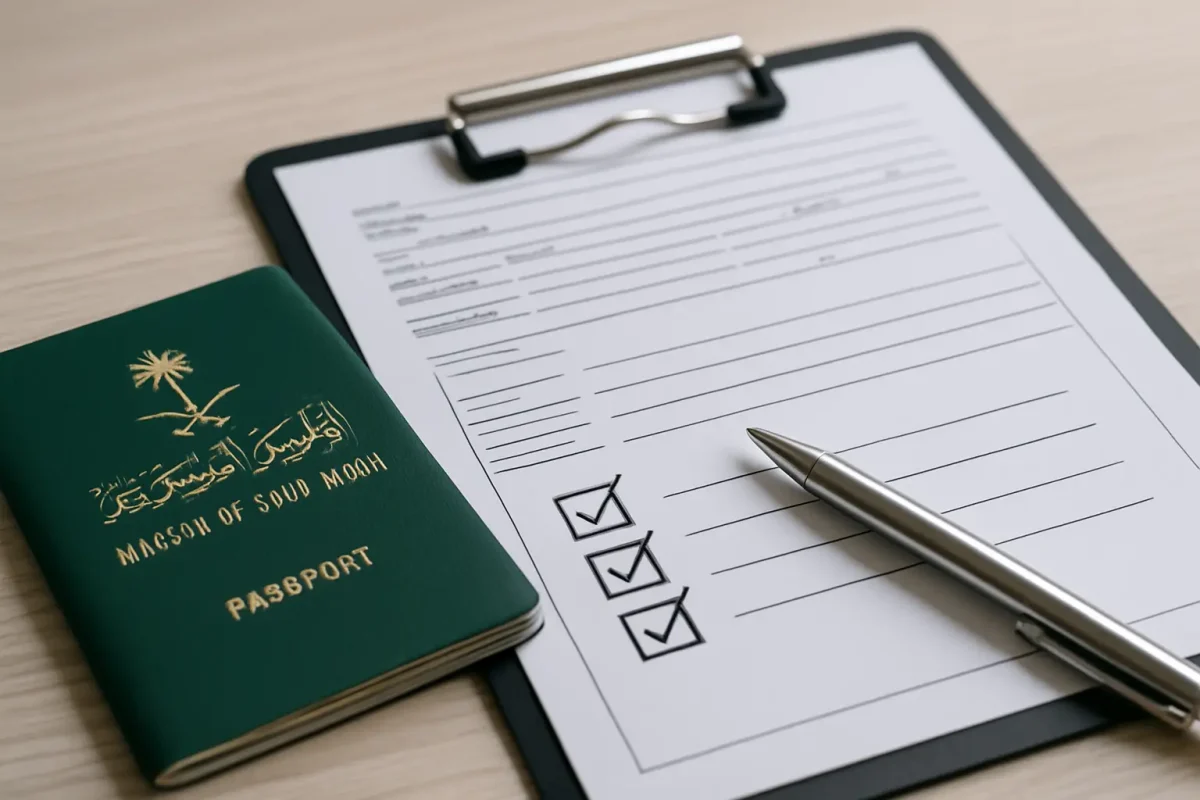
You usually find out your document set is wrong at the worst possible moment – when the sponsor in Saudi is ready to issue the family visa authorisation, flights are being priced, and HR is asking for dates. For a Saudi family residence visa, the paperwork is not “administrative”. It is eligibility. One missing legalisation stamp or a mismatch in names can stop issuance, delay MOFA-related steps, or trigger rework that adds weeks.
This guide focuses on the documents that typically decide whether a family residence visa application moves quickly or gets parked for clarification. Requirements can vary by nationality, employer category, and family relationship, so treat this as a compliance-first baseline rather than a one-size-fits-all list.
What “family residence” means in Saudi processing
A family residence visa is normally tied to a resident sponsor in the Kingdom (commonly the employee holding an Iqama). It is distinct from a family visit visa. The residence route expects higher scrutiny because it leads to dependent residence status, not a time-limited entry.
That distinction affects documentation in two ways. First, relationship evidence must be stronger and correctly legalised. Second, data consistency across passports, civil records, and sponsor records matters more, because the dependent details are used downstream for residency issuance.
Core saudi family residence visa documents
When clients ask for “the list”, they often mean the applicant’s documents. In practice, Saudi processing is a chain: dependent documents, sponsor documents, and attestation/legalisation artefacts have to line up.
Passports and identity evidence
At minimum, each dependant needs a passport with adequate validity (check this early, because renewals can disrupt name formats and passport numbers mid-process). You will also need passport biodata copies in the format required by the submission channel.
If a dependant holds dual nationality, it “depends” which passport is used for the visa. Switching passports late can force re-issuance of authorisations or new submission records. Decide your travel document up front and keep it consistent.
Relationship documents: marriage and birth certificates
For spouses, the marriage certificate is the cornerstone document. For children, it is the long-form birth certificate showing parents’ details. Saudi authorities typically look for clear linkage between the sponsor and the dependent, and they will compare names, dates, and spelling.
A common failure point is minor variation that feels harmless in the UK context but is treated as a discrepancy in visa processing – for example, a missing middle name on a birth certificate, different transliterations, or a spouse’s name changing after marriage without the passport being updated.
Sponsor evidence (Saudi-side)
Although the dependant is the visa applicant, the sponsor’s Saudi residency status drives eligibility. Sponsors are commonly asked to provide proof of valid residence, employment details, and evidence of relationship eligibility under current rules. If the sponsor’s job title, employer name, or Iqama details have recently changed, document alignment becomes critical.
If your sponsor is supported by an employer HR team, make sure they are working from the same spellings and document set you intend to submit in London. Mismatched sponsor details are one of the easiest ways to create avoidable back-and-forth.
Photos and application forms
Photo specifications are stricter than many applicants expect. If your photos are even slightly outside the required format (background tone, proportions, or recentness), it can cause a re-submission request. Application forms also need careful attention to how names are entered – especially for longer names, hyphenation, and the order of family names.
This is also where consistency matters: the form should match the passport exactly, not your preferred formatting.
Legalisation and verification: where delays usually start
Most family residence applications do not fail because a document is missing. They stall because a document is present but not acceptable for Saudi use.
Apostille and MOFA-related legalisation
UK-issued civil documents typically require authentication before they are accepted for Saudi immigration purposes. Depending on the document type and issuing jurisdiction, this can involve apostille and then further legalisation steps for Saudi use.
The practical risk is timing. Legalisation is not instantaneous, and if you wait until the sponsor receives authorisation to start legalising documents, you often create the very delay you were trying to avoid.
Mosadaqa and QVP checks (when applicable)
Saudi compliance requirements evolve, and some cases require additional verification workflows such as Mosadaqa verification or QVP-related checks. These are not “optional extras” – when they apply, they determine whether your supporting documents will be recognised during processing.
It depends on factors such as the applicant’s nationality, document type, and the current rules being enforced through official portals and submission channels. If you are unsure whether QVP is in scope for your case, check before you commit to a submission date.
Certified translations (if required)
If any supporting document is not in English or Arabic, you may need a certified translation. Even when documents are in English, there are situations where Arabic translations are requested for downstream processing.
The key is to translate after you have the final, correct version of the document and to keep the translated names consistent with the passport spellings. Translation errors can be as damaging as missing stamps.
Common document mismatches that trigger rework
If you want to reduce refusal risk and speed up approval, focus on the predictable mismatch patterns.
One is name consistency. UK documents may abbreviate middle names or omit them entirely. Saudi systems often require full names as per passport, and the sponsor’s Saudi records may show a different spacing or order. Decide the “source of truth” (usually the passport) and reconcile the rest around it.
Another is marital status and surname changes. If a spouse’s passport shows a married name but the marriage certificate shows the maiden name format differently, you may need supplementary evidence or updated documents.
A third is document condition and legibility. Faint scans, cropped stamps, or low-resolution images can lead to rejection even when the underlying document is correct.
A practical sequencing approach (so you do not lose weeks)
The fastest cases are not the ones with the fewest documents. They are the ones that sequence the documents correctly.
Start by confirming which family members are eligible under the sponsor’s status and role in Saudi. Then confirm the travel passport each dependant will use. Only after that should you legalise civil documents, because legalisation often has to match the exact document version and details.
While legalisation is in progress, prepare the photos, compile passport copies, and validate spellings across sponsor and dependant records. This parallel approach is what typically turns a stressful scramble into a controlled file.
If you prefer a managed workflow with fewer touchpoints, agencies that handle end-to-end document preparation and embassy submission can reduce rework. For applicants processing from London and other jurisdictions, SaudiVisa.London can coordinate the document chain, including legalisation and verification steps, under secure handling and a compliance-led checklist: https://saudivisa.London.
What changes depending on your situation
Two families can apply in the same week and still face different document demands.
If the dependant is a stepchild, adopted child, or a child with a different surname, you may need additional proof of guardianship or parental link beyond the standard birth certificate. If the marriage was registered outside the UK, the legalisation route can differ, and timelines can shift.
If the sponsor has recently changed employer, job title, or residency status, the Saudi-side evidence may need updating before the dependant application can move. This is not a paperwork preference – it is how the sponsor relationship is validated.
If you are trying to travel on a tight timeline, be realistic about what is controllable. Passports, legalisation queues, and portal verification steps have fixed lead times. The lever you can control is file accuracy and sequencing.
Keeping your application “submission-ready”
Treat your document pack as a compliance file, not a collection of scans. Use consistent naming, keep original versions secure, and ensure every legalisation stamp is visible and complete. Before submission, do a final cross-check: passport names vs certificates, dates of birth across all documents, and sponsor identifiers.
If something does not match, address it before you submit. Fixing a mismatch after submission is usually slower, more expensive, and more stressful than resolving it at source.
The most helpful mindset is simple: every document should be able to stand on its own, and every pair of documents should agree with each other. Do that, and the process becomes far more predictable – which is exactly what families and HR teams need when relocation dates are on the line.


