








Saudi Visa Medical Test UK: What to Expect
March 4, 2026
Saudi Visa Compliance Workflow for Employers
March 8, 2026
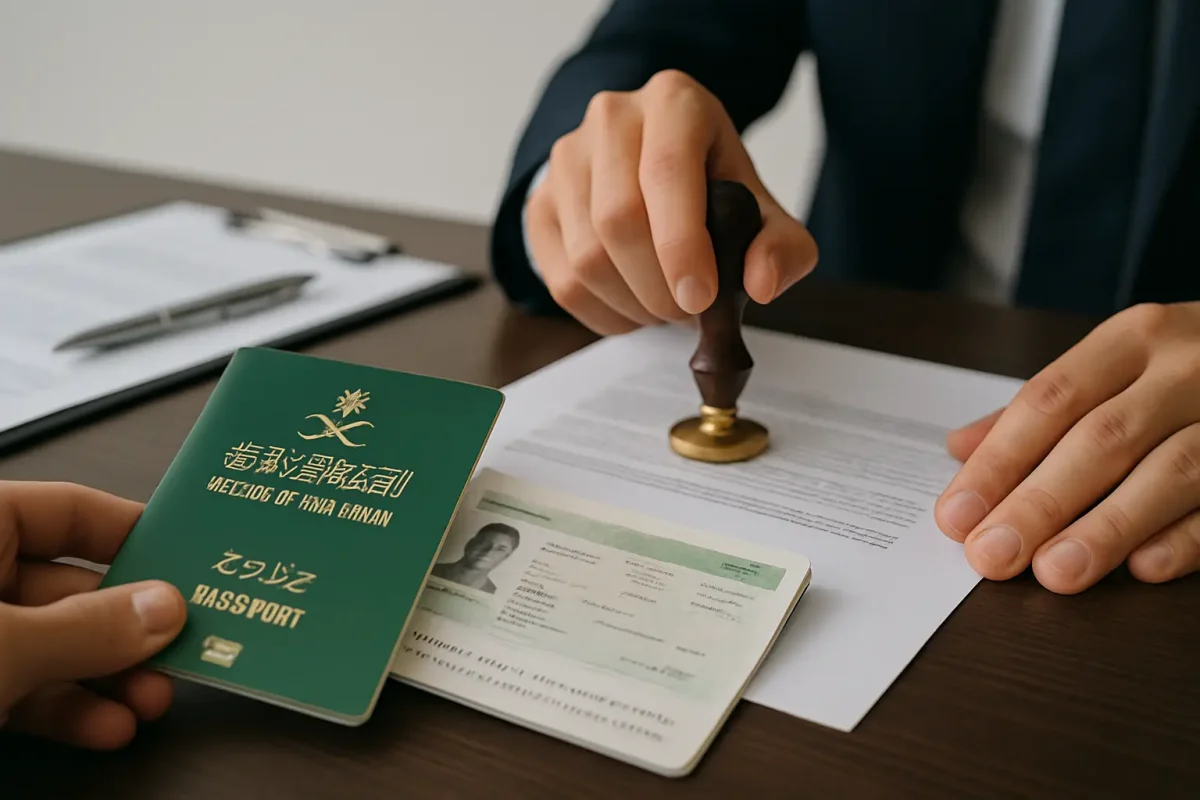
One missing stamp can stall a Saudi visa file for weeks. Not because the document is “wrong”, but because it has not moved through the correct chain of authentication – in the right order, with the right versions, and in the format the Saudi authorities and visa platforms will accept.
This is where most delays happen: applicants legalise the wrong copy, legalise too early (then the document expires), or skip a stage because a different country’s process looked similar. Below is a practical, compliance-first walkthrough of Saudi visa document legalisation step by step, written for UK-based applicants and the HR teams moving them.
What “legalisation” actually means for Saudi visa purposes
Legalisation is the formal verification trail that proves a document is genuine and issued by a recognised authority. For Saudi Arabia, legalisation is often paired with Saudi-side verification steps (for example, MOFA-related validation and, for some roles, platform checks such as QVP or Mosadaqa).
The key point is this: legalisation is not one stamp. It is a sequence, and the sequence depends on (a) what the document is, (b) where it was issued, and (c) what the visa type and occupation trigger.
Before you start: confirm which documents must be legalised
Most refusals and rework start here. “Legalise everything” sounds safe, but it is expensive and can create mismatched versions across portals and employer files. The better approach is to map documents to the visa category and to the sponsor’s requirements.
For Saudi work visas and many long-stay residence workflows, legalisation commonly applies to education certificates (degree, diploma), professional awards or licences, and civil status documents (for example marriage certificates for dependants). For business visit visas it is often lighter, but it depends on what the inviting entity requests and whether supporting corporate documents are being submitted.
If you are unsure, do not guess. Your sponsor or mobility team should confirm the document list first, because the “right” legalisation set is the one that aligns with the exact visa route and occupation.
Saudi visa document legalisation step by step (UK-issued documents)
The sequence below assumes your documents were issued in the UK. If they were issued elsewhere, the chain changes – and mixing chains is a common reason documents get rejected.
Step 1: check the document type and obtain the correct version
Start by verifying what you are holding:
A university certificate might be an original parchment, a transcript, or a digital award letter. A marriage certificate might be a short certificate when the process expects a full version. If you legalise the wrong format, the stamps can be perfectly valid and still unusable for the Saudi file.
As a rule, aim for the version that is (a) official, (b) complete, and (c) most widely accepted for cross-border verification. If the document is laminated, damaged, or not clearly legible, replace it before legalisation.
Step 2: prepare supporting confirmations where required
Some documents need an additional confirmation layer before they can be legalised. Education documents are the most common example – you may need a university verification letter or an approved verification method, depending on the route your sponsor and the Saudi-side checks require.
This is also where name matching matters. If your passport name differs from your certificate name (middle names, spelling, married name), you should resolve this now with supporting evidence. Trying to patch identity mismatches later often forces the whole chain to be repeated.
Step 3: solicitor or notary certification (when applicable)
Certain documents – particularly copies – may need to be certified by a solicitor or notary public before they can proceed through the legalisation chain.
This is not a box-ticking step. The wording of the certification, the stamp clarity, and whether it is a true copy of the correct original all matter. Poorly executed certifications cause rejection later because downstream authorities will not accept an ambiguous statement.
Step 4: apostille (UK legalisation)
For UK-issued documents, the apostille is often the core authentication event in the chain. It confirms the authenticity of the signature or seal on the document (or on the notary/solicitor’s certification).
Timing is important. Some Saudi workflows treat older documents as stale, even if the apostille is technically valid. If you apostille too early and then the sponsor changes the start date, you can end up redoing the work. Align apostille timing with the sponsor’s mobilisation schedule.
Step 5: Saudi embassy-related legalisation (where required)
Depending on the document and route, the next stage may involve Saudi embassy/consular legalisation in the UK. This is where accuracy becomes unforgiving: document names, passport numbers (if referenced), and consistency across your visa file must match.
Embassy submission also introduces operational constraints – appointment availability, submission windows, and document handling requirements. If you are running a corporate relocation timeline, plan this stage as a potential critical path.
Step 6: Saudi-side MOFA-related validation (where applicable)
For certain use cases, documents may need validation on the Saudi side through MOFA-related steps or sponsor-linked compliance checks.
This is where applicants often get caught out by split responsibilities: UK-side legalisation alone is not always the end of the road. Your sponsor may need to complete a Saudi-side action before the document is considered usable in the employment or residency workflow.
Step 7: align the legalised documents with visa platform requirements
For work visas and regulated roles, your legalised documents may still need to be presented through specific verification platforms or programmes (for example QVP or Mosadaqa, depending on nationality, profession, and current rules).
These systems are sensitive to version control. If you upload a scan that differs from the legalised copy (different page order, cropped apostille, missing back page), you can trigger rejections even though the original is correct.
Use high-resolution colour scans, capture every stamp and reverse page, and keep file names consistent so HR teams and vendors are always referring to the same artefact.
Common failure points (and how to avoid them)
Most legalisation delays are predictable. They typically come down to sequence, identity, or document integrity.
The first is the wrong order. If you notarise after the apostille, or try to use an uncertified copy where an original is required, you may be forced to restart.
The second is mismatched names and dates. A single-character spelling difference can cause a platform mismatch later. Fix it early with a formal name-change document or a bridging letter that your sponsor will accept.
The third is scanning and handling. A perfect legalisation chain can be made unusable by low-quality scans that cut off the apostille number, blur embossed seals, or omit the reverse side of a certificate.
The fourth is leaving timing to chance. Police certificates, medicals, and certain supporting letters have short validity windows. Legalising them too early is a real cost risk.
“It depends” scenarios: when the steps change
If your documents were issued outside the UK, you usually need to legalise them in the issuing country’s chain, not through a UK-only process. Attempting to “convert” a foreign document using UK steps is one of the fastest routes to rejection.
If you are applying for a family residence or visit visa, the emphasis may shift towards civil documents. That brings translation and format questions – and some sponsors insist on specific certificate versions.
If your role is regulated (engineering, medical, certain technical fields), expect additional verification layers and stricter scrutiny of education and professional licences. In these cases, legalisation is not just administrative – it is eligibility.
How to run legalisation efficiently inside a company timeline
For HR and mobility teams, the most efficient workflow is built around dependency management.
First, lock the document list with the sponsor and only then start legalisation. Second, create a single controlled set of scans that will be used for every portal, submission, and internal record. Third, sequence tasks so that long-lead items (replacement certificates, university confirmations) start immediately, while short-validity items (police clearance, certain letters) are timed closer to submission.
If you need one operator to manage the chain end-to-end, SaudiVisa.London can coordinate UK-side preparation and Saudi-side compliance steps as a single workflow, which reduces handoffs and version drift.
What to do if you have already legalised the “wrong” document
Do not try to patch it with informal declarations. In most cases, the cleanest fix is to obtain the correct version and rerun the chain properly.
If the issue is name mismatch, resolve it with formal evidence rather than hoping the embassy or platform reviewer will “understand”. If the issue is scanning, rescan before you submit anything – once a poor scan is in a system, it can follow the file and cause repeated queries.
Treat rework as a risk-control exercise: identify the exact point the chain became non-compliant, correct that point, and then ensure every downstream copy and upload matches the corrected artefact.
A compliant legalisation chain is not about collecting stamps. It is about creating a document trail that a reviewer can verify quickly, without questions – which is the closest thing you get to speed in a process that is designed to prioritise certainty.


