






QVP verification for engineers in Saudi Arabia
February 25, 2026
How to Correct Errors in Your Saudi Visa Application
February 26, 2026
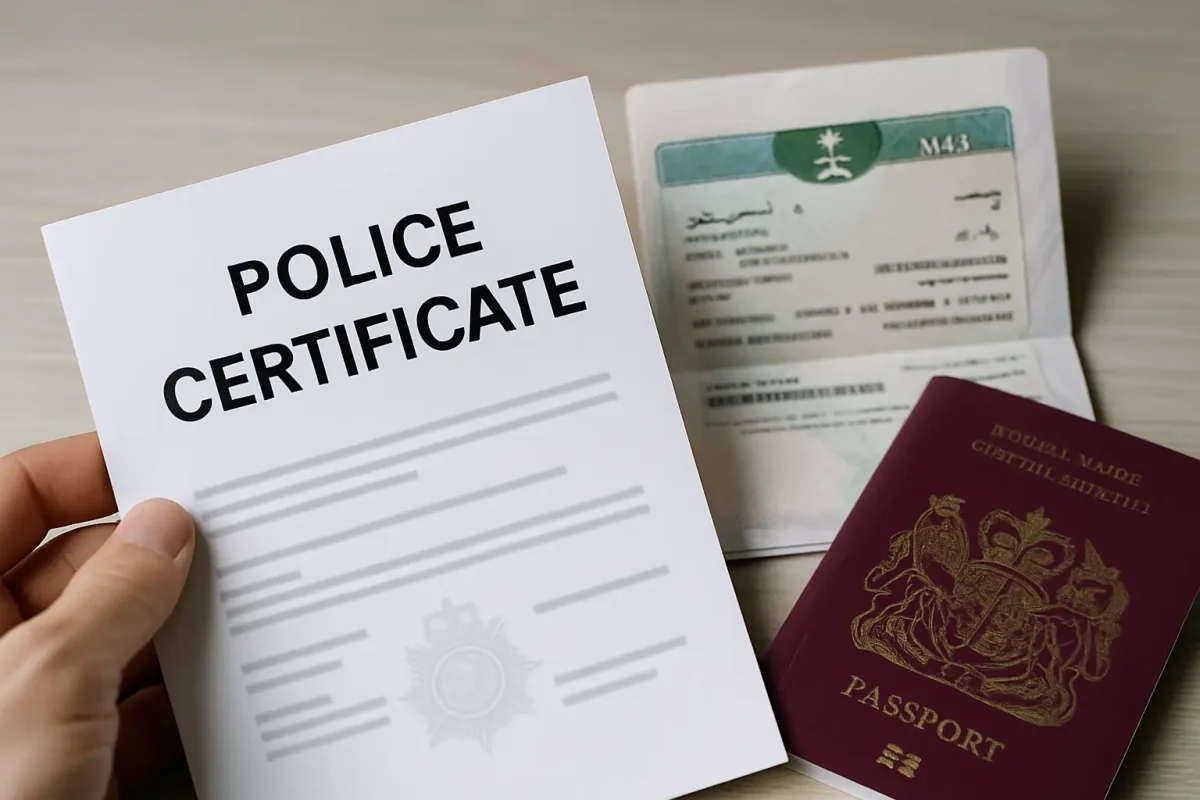
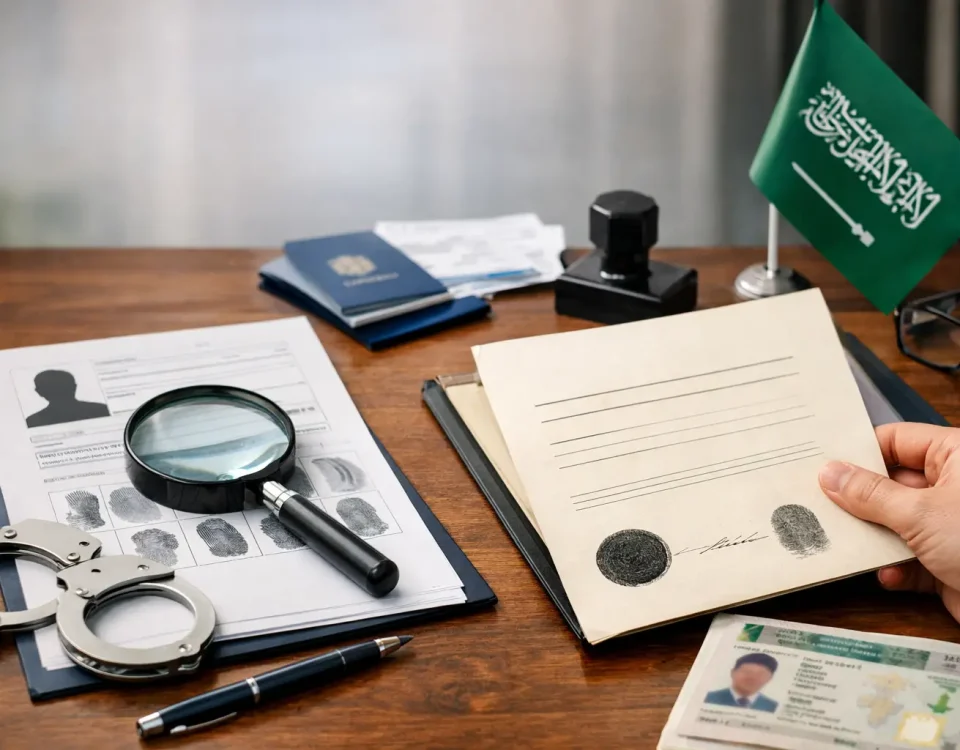
If your Saudi visa file is otherwise ready but your police clearance is missing, you are not “nearly there”. For many Saudi work and residence pathways, the police certificate is one of the documents that decides whether the embassy submission can even be accepted. The most common UK-side clearance used is the ACRO Police Certificate – and the problems we see are predictable: applicants order the wrong document, submit an expired certificate, or discover too late that the name and passport details do not match the rest of the pack.
This article explains how an acro police certificate for Saudi visa applications is typically used, what to expect, and where the delays come from so you can plan the file properly and keep your sponsor’s onboarding timeline intact.
What an ACRO Police Certificate proves (and what it does not)
An ACRO Police Certificate is a UK police clearance document issued for immigration and visa purposes. It is designed to confirm whether UK police records show convictions, cautions, reprimands or warnings (where applicable), or whether the applicant has “No Trace” or “No Live Trace” status.
It is not a character reference and it is not a DBS certificate. A DBS check is designed for UK employment screening and safeguarding decisions, and it is commonly rejected for overseas immigration because it is not issued as an immigration police certificate. If your sponsor or the Saudi side asks for a “police clearance”, they usually mean ACRO for UK nationals and UK residents.
If you have lived outside the UK, ACRO only covers UK records. Saudi authorities or your employer may also require police certificates from other countries of residence, depending on time spent there and the role. That is where planning matters – multi-country clearances are often the reason a two-week “document stage” turns into a two-month delay.
When Saudi visa routes typically require ACRO
The requirement depends on visa type, role, and the current compliance workflow your sponsor is following in the Kingdom.
For Saudi work visas and long-stay residence-linked applications, a police certificate is frequently part of the core document set alongside degree attestations, medical results, and sponsor paperwork. In regulated professions, engineering roles, and positions involving access to sensitive sites, employers are also more likely to enforce police clearance as an internal onboarding rule even where the embassy has some discretion.
For short business visits, police certificates are less common, but “less common” is not “never”. Some corporate sponsors apply a consistent compliance pack across travellers, and certain assignments are processed with more scrutiny than a standard visit.
The practical rule is this: if your sponsor or agent mentions it, treat it as mandatory and time-critical. Waiting to see if it will be asked for later is how applications slip into a rework loop.
ACRO Police Certificate vs. Subject Access Request and DBS
Because the names sound similar, applicants often order the wrong thing.
A Subject Access Request (SAR) is a data disclosure right. It is not a police certificate for visa purposes and is not formatted for embassy submission.
A DBS certificate is also not the correct product for Saudi visa filing in most cases. Even when it looks “official”, it does not satisfy the same immigration purpose and may not contain the information the receiving authority expects.
If your checklist says “police certificate” and you are applying from the UK, default to ACRO unless you have written confirmation to the contrary.
Getting the details right: the mismatch errors that trigger delays
Saudi visa processing is detail-driven. The police certificate must align with the rest of the file.
Start with your name format. If your passport shows middle names and your ACRO application omits them, you can create an inconsistency that later becomes a correction request. The same applies to spelling, hyphens, and spacing. If you have changed your name, you need to make sure your supporting documents and your visa application data are consistent and evidential.
Check passport number and expiry. ACRO certificates are tied to the identity details you provide. If you renew your passport mid-process, you may need to confirm whether the existing certificate remains acceptable for your submission date and whether the Saudi-side workflow requires the new passport number to appear consistently across documents.
Address history is another frequent issue. ACRO asks for addresses to verify identity. If you compress or approximate address history, you risk a processing query that slows the issuance.
Finally, read the result carefully. “No Trace” and “No Live Trace” are different statements. They are both common and can be acceptable, depending on the employer and the receiving authority’s expectations. If you have any record disclosed, you should not assume it is an automatic refusal, but you should expect additional scrutiny and you should align early with your sponsor on how it will be handled.
Validity: how long the ACRO can be used for Saudi submission
ACRO certificates do not have a universal legal expiry date in the way a passport does. In visa processing, validity is usually a policy decision by the receiving authority or an operational rule by the embassy and sponsor.
For Saudi visa workflows, the safe approach is to treat the certificate as time-sensitive and plan to submit it while it is still “fresh” relative to your embassy submission and medical date. In practice, many sponsors prefer certificates issued within a recent window, and some will reject older documents even if the embassy might technically accept them.
If your project timeline is uncertain, do not order ACRO too early “just in case” – but do not leave it until the week you intend to submit, either. The correct timing is the point where the rest of your file is close enough to complete that you can submit promptly once the certificate arrives.
Will the ACRO need legalisation for Saudi Arabia?
This is the question that affects both cost and timeline.
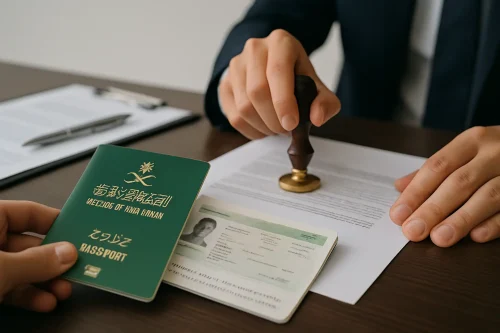
Some Saudi visa packs require documents to be legalised, which can involve UK apostille and then Saudi-side steps depending on the document type and the current process your sponsor is using. Whether an ACRO certificate must be legalised can vary by visa route and by the specific instruction coming from the Saudi embassy or the sponsor’s compliance team.
Treat this as an “it depends” item, not something to guess. If you legalise unnecessarily, you may waste time and fees. If you skip legalisation when it is required, you can lose weeks when the file is kicked back for completion.
The compliance-first approach is to confirm legalisation requirements before you order, so you can request the certificate in the correct format and time it to accommodate any additional steps without pushing your submission window.
Timelines and planning: how to avoid the common bottlenecks
Delays usually happen for three reasons: the applicant orders the wrong document, the certificate arrives but the rest of the file is not ready, or the certificate is ready but the submission is postponed until it becomes stale against the sponsor’s preferred validity window.
The efficient workflow is to run your document stage like a controlled checklist. You gather the identity documents, degree and employment evidence (where required), and sponsor instructions first, then order the ACRO at the moment the rest of the pack is within reach. That reduces idle time and avoids re-issuing documents.
Also consider travel and workload. If you are on site, travelling, or moving house, your ability to respond to identity queries and supply clean scans can drop quickly. That is often what turns a straightforward request into a series of follow-ups.
For employers and HR teams, the key is consistency. If you have multiple hires mobilising to Saudi Arabia, standardise the point in your onboarding process where ACRO is initiated, and insist that names and passport details are captured from the biometric page rather than typed manually. Manual data entry is one of the biggest sources of mismatches.
What if you have lived in other countries?
If you have lived outside the UK, you may need additional police certificates from those jurisdictions. The trigger is usually length of residence and recency, but the exact rule can be set by the sponsor or embassy instruction.
This is where risk management matters. Some countries issue police clearances quickly; others take weeks and require fingerprints, in-person appointments, or local authorisations. If your mobility history includes multiple jurisdictions, you should map that early and obtain realistic lead times before committing to a start date in the Kingdom.
Getting it processed without mistakes
If your organisation wants a controlled, end-to-end workflow that aligns ACRO timing with the rest of the Saudi visa pack and any legalisation steps, use a single vendor that can run the document chain rather than splitting tasks across different providers. That reduces handoff errors and avoids duplicated checks.
If you want that service model, you can route the ACRO and wider Saudi document pack through SaudiVisa.London so the clearance, supporting documents, and submission readiness are managed as one compliance file.
The difference is not just convenience – it is error reduction. A missed middle name, an inconsistent passport number, or a late-stage realisation that legalisation is required can cost more than the original certificate.
Closing thought
Treat the ACRO as a compliance document, not an admin task. When it is ordered at the right moment, issued with clean identity data, and aligned with the sponsor’s current requirements, it stops being a bottleneck and becomes one of the quickest “green ticks” in your Saudi visa file.