






Saudi family visit visa from UK: how to get it right
February 17, 2026
Saudi Embassy Submission in London: Get It Right
February 19, 2026
The moment a sponsor tells you “MOFA is issued”, the clock starts. HR wants a start date, mobilisation teams want flights pencilled in, and the candidate wants certainty. But MOFA alone is not a visa in your passport. The gap between “MOFA approved” and “visa stamped” is where most avoidable delays happen – usually because one document in the chain is mis-matched, incorrectly legalised, or uploaded against the wrong reference.
This article breaks down the mofa visa stamping Saudi process in practical terms for applicants and employers submitting from London and internationally. It is written for speed and compliance, not guesswork.
What “MOFA” means in the stamping chain
MOFA is the Ministry of Foreign Affairs in Saudi Arabia. In visa workflows, “MOFA” typically refers to the sponsor-side authorisation issued inside Saudi systems (often communicated as a MOFA number or authorisation reference). It confirms that a Saudi sponsor has raised the visa request and that the case has been approved for onward processing.
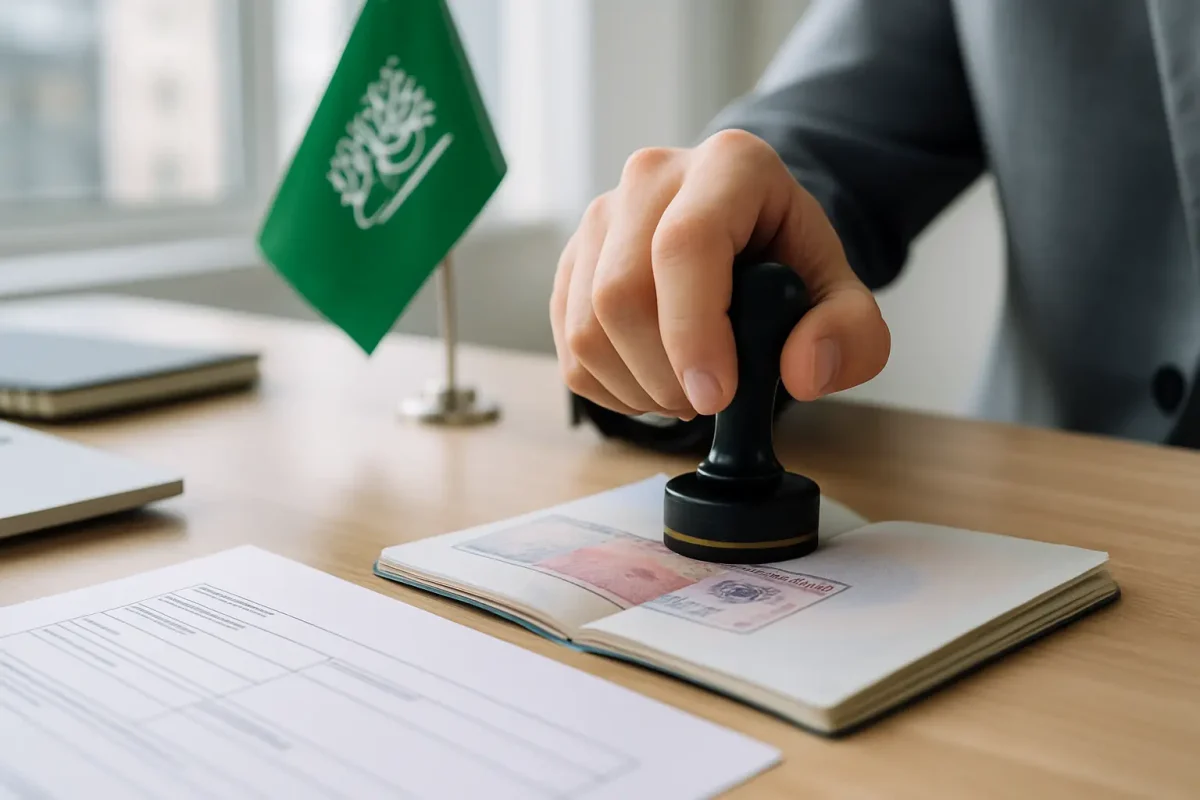
What it does not do is replace embassy submission. Stamping is the consular step where your passport (or e-visa authorisation, depending on visa type and current rules) is processed against the MOFA authorisation, your identity, and your supporting documents.
For work and family residence scenarios, MOFA approval is only one gate. The embassy will still check document legality, role consistency, and whether the file matches the sponsor’s request exactly.
The mofa visa stamping Saudi process, end to end
The cleanest way to think about stamping is: sponsor raises authorisation in Saudi, applicant builds a compliant file in the UK (or country of residence), then the embassy verifies and issues.
Step 1: Sponsor issues the MOFA authorisation
Your sponsor in the Kingdom (company, government entity, or family sponsor depending on visa type) creates the visa request through the relevant Saudi platform and obtains the MOFA authorisation.
At this point, you should request the details you will later need to match your paperwork. In most problem cases we see, the MOFA authorisation is correct – but the applicant’s documents show a different spelling, passport number, job title, or nationality than what was input by the sponsor.
If anything in the MOFA record is wrong, fix it before you legalise documents or book medicals. Correcting the sponsor-side record later can cost days or weeks.
Step 2: Confirm visa type and consular route
“Stamping” can mean different routes depending on your visa category and current consular procedures. Work visas, temporary work visas, and certain family residence cases are typically document-heavy and may require formal embassy submission. Business visit visas may follow a different flow depending on nationality, invitation format, and current entry requirements.
This is where “it depends” is real. The same person travelling to Saudi may be eligible for multiple pathways, but only one will fit the sponsor’s compliance needs and your timeline.
Step 3: Build a document set that matches the MOFA record
Your file must be internally consistent. The embassy is not only checking that documents exist – they are checking that each document supports the same narrative as the MOFA authorisation.
Typical documents involved (by visa type) can include degree certificates, employment letters, police clearance, medical reports, and sponsor-issued letters. The exact list varies by nationality, profession, and the Saudi sponsor’s sector.
The key operational rule is simple: every spelling, date, and number must match the passport and the MOFA authorisation. If your degree uses initials but your passport is fully spelt, or your job title differs from the sponsor’s authorisation, you are setting up a query.
Step 4: Legalisation and verification steps (where time is often lost)
For many work and residence routes, documents must be legalised or verified before the embassy will accept them.
This may include apostille/legalisation steps and Saudi-side verification requirements such as Mosadaqa, plus profession-led verification where applicable. In some regulated professions, additional checks can be triggered by the job title on the MOFA authorisation.
Trade-off to be aware of: rushing legalisation without confirming sponsor details can backfire. If you legalise a document that later needs amendment (for example, a corrected job title letter), you may need to repeat steps and pay again.
Step 5: Medicals and police clearance timing
For work and some residence-related cases, medical reports and police clearances are time-sensitive.
Do not treat these as “tick-box” items. Police clearance must be the correct issuing authority and within acceptable validity at the time of submission. Medical reports must be from an acceptable clinic route and completed to the required format.
Operationally, you want these timed so they are valid when you submit, but not so early that they expire if the sponsor updates the MOFA record or your legalisation takes longer than expected.
Step 6: Embassy submission and stamping
Once your file matches the MOFA authorisation and all verification steps are complete, the application is submitted for consular processing.
This is where secure handling matters. Passports and original documents must be packaged correctly, and forms must be completed exactly as required. Small errors at this stage – wrong visa category ticked, inconsistent employment dates, missing sponsor details – can trigger a rejection or a request to resubmit.
If your case is urgent, you should still prioritise correctness over speed. “Fast” only works when the file is clean.
Step 7: Collection and final checks before travel
After stamping/issuance, check the visa details immediately. Names, passport number, validity dates, entries, and visa type must be correct before travel.
If you are relocating for work, align your travel plan with onboarding requirements inside Saudi (iqama/residency steps, employer registration, and any role-specific compliance). Stamping is not the end of compliance – it is the entry gate.
The five most common delay points (and how to avoid them)
Most stamping delays come down to mismatch and timing rather than “random embassy issues”. These are the repeat offenders.
First, name and passport inconsistencies. If the sponsor entered a shortened name on the MOFA authorisation but the passport shows your full name, the embassy may hold the file. Ask the sponsor for a screenshot or exact text and compare it line-by-line.
Second, job title drift. The job title on the MOFA authorisation must align with your supporting documents. If your employment letter says “Project Engineer” but the authorisation says “Mechanical Engineer”, you may trigger extra verification or a request for amended letters.
Third, incomplete legalisation/verification. Many applicants assume an apostille is the only requirement, then discover a Saudi-side verification step is also expected for that document type. Build the route based on the visa category and the sponsor’s expectations, not assumptions.
Fourth, expired time-sensitive documents. Police clearances and medicals often have validity windows. If you submit with documents that are close to expiry, any consular delay can push you outside acceptable timeframes.
Fifth, submitting before the sponsor-side record is stable. If the sponsor is still changing the role, location, or visa category, you risk preparing documents for a moving target.
How to keep corporate mobilisation on track
If you are HR or mobility managing multiple hires, treat MOFA as a controlled handover point.
Set a rule that no one books a medical, pays for legalisation, or hands over a passport until you have received the MOFA authorisation details and confirmed exact personal data and role wording. Build a single “gold record” for each candidate – passport bio page, sponsor authorisation details, and the final job title – and make every supplier work from that.
Where you need predictability at scale, the win is standardisation: the same document naming, the same review checklist, and the same escalation route back to the sponsor when something does not match.
When to use an agency vs managing it internally
If you have an experienced in-house team and a cooperative sponsor, you can manage parts of the chain yourself. The risk is that Saudi requirements shift, and “last time we did it this way” stops being reliable.
An agency becomes valuable when any of the following are true: you are working to a fixed mobilisation date, the candidate is in a regulated profession, documents need multi-step legalisation, or the sponsor’s portal process is strict and time-bound.
If you want a single vendor to manage document preparation, legalisation, verification support and embassy submission from London, SaudiVisa.London operates an end-to-end workflow designed to minimise errors and reduce turnaround time across work, business, temporary work and family routes.
A compliance-first checklist you can apply today
Before you move from MOFA approval to embassy submission, pause and verify three items: the MOFA authorisation details match the passport exactly, every supporting document supports the same job title and identity, and your time-sensitive documents will still be valid on the day you submit.
That three-part check prevents most stamping delays, and it gives HR teams a defensible process when start dates are under pressure.
The fastest application is rarely the one that is pushed hardest – it is the one that is prepared once, prepared correctly, and submitted cleanly.