





Sending UK Employees from London to Saudi Arabia
March 2, 2026
Saudi Visa Medical Test UK: What to Expect
March 4, 2026
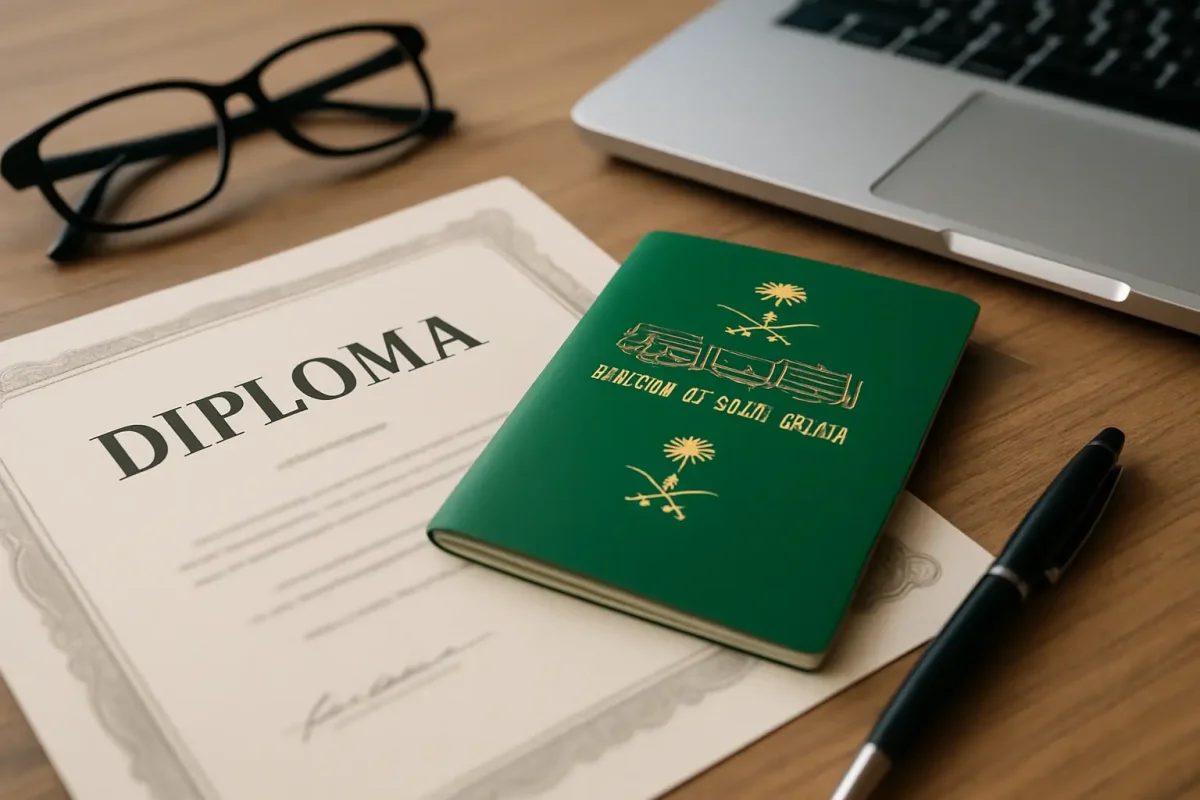
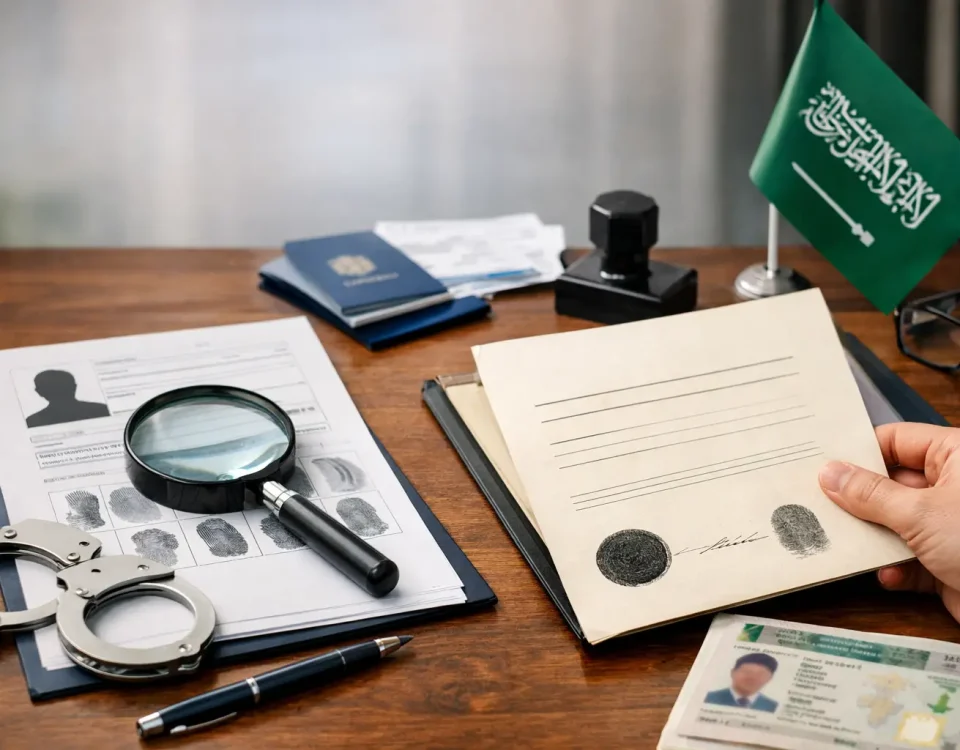
Your Saudi visa timeline often lives or dies on one document: your degree certificate. If it is not prepared exactly the way the employer, the verification portals, and the Saudi authorities expect, everything else can be ready and you will still stall at the last mile – usually when HR needs certainty and you need a start date.
This is the practical reality behind the search for “how to prepare degree for saudi visa”. The goal is not to make your degree look nicer. The goal is to make it verifiable, legalised where required, and aligned with the specific visa route and profession so it can pass checks without back-and-forth.
Why your degree needs “preparation” at all
A UK degree certificate is a legitimate academic document, but Saudi work and employment-linked visas often require extra validation steps so that the document can be trusted across borders. In practice, your degree may be assessed in three different ways.
First, your employer or their agent checks that the qualification matches the role and the profession on the visa authorisation. If the job title is regulated or technical, the scrutiny is higher and mismatches create delays.
Second, third-party verification systems may require a primary-source verification of your qualification. This is where applicants get caught out: you can have the original certificate in hand, but the process may still require confirmation directly from the awarding body or an approved verification route.
Third, legalisation steps can be required so the document is recognised for official use in Saudi Arabia. This is not a “nice to have”. If legalisation is required and you skip it, your file can be rejected at submission or held until corrected.
Step 1: Confirm the visa type and who is asking for what
Before you pay for anything or post original documents anywhere, clarify the pathway. A Saudi work visa, a temporary work visa, and a business visit visa can treat education evidence differently. Your sponsor and their PRO team usually set the standard based on the profession and current compliance rules.
If you are being hired into an engineering, technical, medical, or other regulated profession, expect tighter controls and more frequent requests for verification and legalisation. If your role is not degree-mandated, the employer may still request your degree as a compliance safeguard, but the depth of processing can vary.
This is the first trade-off: “doing everything” can cost more and take longer than necessary, but doing too little is the fastest route to refusal or a start-date slip. Get the requirement confirmed in writing by HR or your sponsor before you begin.
Step 2: Check your degree document is usable (and fix issues early)
Saudi visa processing is unforgiving on document quality. Make sure what you have can survive scanning, verification, and legalisation.
Look for these common friction points. If your certificate is damaged, laminated, or unreadable at the edges, you may need a replacement from your university before any downstream steps. If your name differs from your passport (middle names missing, different spelling, a different surname), you may need supporting evidence such as a deed poll or marriage certificate to bridge the identity trail.
Also check that your certificate shows the awarding institution and the qualification clearly. Some applicants only have a transcript or a statement of results. Those can be useful, but they do not always substitute for the actual certificate depending on the sponsor’s compliance rules.
Step 3: Prepare compliant scans and supporting documents
Even when originals are ultimately required, your file typically starts with digital checks. Treat scanning as a compliance step, not an admin chore.
Use a colour scan, straightened, with the full page visible and no fingers, shadows, or cropped seals. If the certificate has text or stamps on the reverse, scan both sides. Save in a clean format (usually PDF) and do not compress so heavily that security features blur.
Alongside the degree, your sponsor may ask for your passport bio page and a CV that aligns with the role. This matters because inconsistencies create manual queries. If your CV lists a different award title from your certificate, or the dates do not match, that can trigger a verification hold.
Step 4: Decide if you need attestation/legalisation, verification, or both
Applicants often use these terms interchangeably, but they solve different problems.
Legalisation (sometimes described as attestation) is about official recognition of the document for use in Saudi Arabia. Verification is about proving the qualification is genuine, often through checks that trace back to the university.
You may need one, the other, or both. It depends on the visa type, profession, and current policy applied by the sponsor and the Saudi-side authorities.
When requirements shift, the safest approach is to treat your sponsor’s checklist as binding, then build in a buffer for Saudi-side requests. If you are working to a tight mobilisation date, plan your degree preparation as early as you plan your medical.
Step 5: Understand QVP and Mosadaqa expectations (where applicable)
For many professional work visa routes, qualification verification can involve systems such as QVP (Qualification Verification Programmes) and, in some cases, Mosadaqa verification. These steps exist to reduce fraud risk and standardise qualification checks.
The operational impact is simple: if your degree is routed through verification, it can add time, and it can generate queries. Queries are not always a sign something is wrong – they often arise because the scan is unclear, the awarding institution name is formatted differently, or your personal details do not match exactly across documents.
To reduce risk, keep your identity trail consistent across your passport, certificate, and any supporting evidence. If you know there is a name change or a spelling discrepancy, disclose it early with the matching documents rather than waiting for a query.
Step 6: MOFA legalisation and embassy-facing packaging
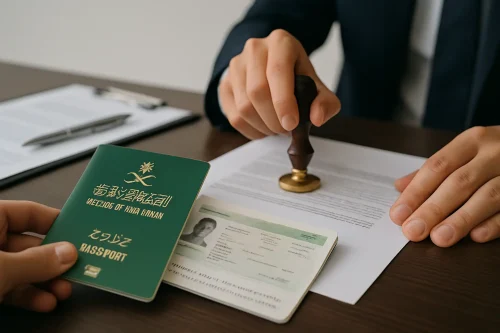
MOFA-related steps and embassy submission rules can be sensitive to document order and certification. If legalisation is required, the sequence matters. A document that is notarised or certified incorrectly can force you to redo earlier steps.
Your aim is a clean chain of authentication that a caseworker can follow without interpretation. That means the degree should be presented in the expected format, with stamps and certificates that are legible and correctly placed, and with supporting documents that explain any anomalies.
If you are applying from London, you also need to factor in how originals move. Posting irreplaceable documents without secure handling is a risk. If your employer needs originals, confirm exactly which originals are needed and when, and keep scanned copies archived.
Step 7: Timeline planning – what “fast” really looks like
A realistic timeline depends on whether you need a replacement certificate, whether verification is required, and how quickly your university responds to any confirmation requests.
If your document is clean and only needs straightforward preparation, you can often move quickly. If verification is required, build in time for back-and-forth. The slowest cases are usually not “difficult” cases – they are cases where the applicant starts legalisation before fixing a name mismatch, or submits low-quality scans that trigger rework.
The efficiency play is to front-load certainty. Confirm the route, confirm the document set, and check alignment across passport, degree, and CV before anything is lodged.
Step 8: Common mistakes that cause refusals or delays
Most delays are preventable. They tend to fall into a few patterns.
One is assuming a transcript is enough when the sponsor expects the certificate. Another is ignoring name consistency until the verification stage, then trying to patch the file under time pressure. A third is sending scans that look fine on a phone but fail when reviewed on a large screen by a caseworker looking for stamps, watermarks, and print quality.
Finally, applicants often underestimate how frequently requirements vary by profession. Two colleagues going to the same company can have different degree handling requirements because their job titles are coded differently in the authorisation.
When to use a specialist to reduce risk
If you are relocating on a fixed start date, if you are in a regulated profession, or if your documents have any complexity (name changes, multiple degrees, overseas awards, or a lost certificate), using a specialist is usually cheaper than a delay.
A document and visa operator can coordinate the UK-side preparation and the Saudi-side compliance steps, so you avoid running parallel processes that clash. If you want end-to-end handling from requirements gathering through legalisation and submission workflow, SaudiVisa.London can coordinate degree preparation, verification-related steps, and the supporting document chain with secure processing: https://saudivisa.London.
The key is not delegation for convenience. It is delegation to reduce error rate when the cost of a mistake is a missed mobilisation window.
A closing thought to keep your process moving
Treat your degree like a compliance asset, not a personal document: align it to your passport identity, prepare it to be verified, and only then push it into legalisation and submission. That sequencing is what keeps your application moving when timelines are tight and requirements change mid-process.